TwoWheelGuide

Skills & safety

Ride with confidence

Confidence on a bike isn’t bravery — it’s knowing where to be on the road, what other traffic is about to do, and how your bike behaves when things get slippery.

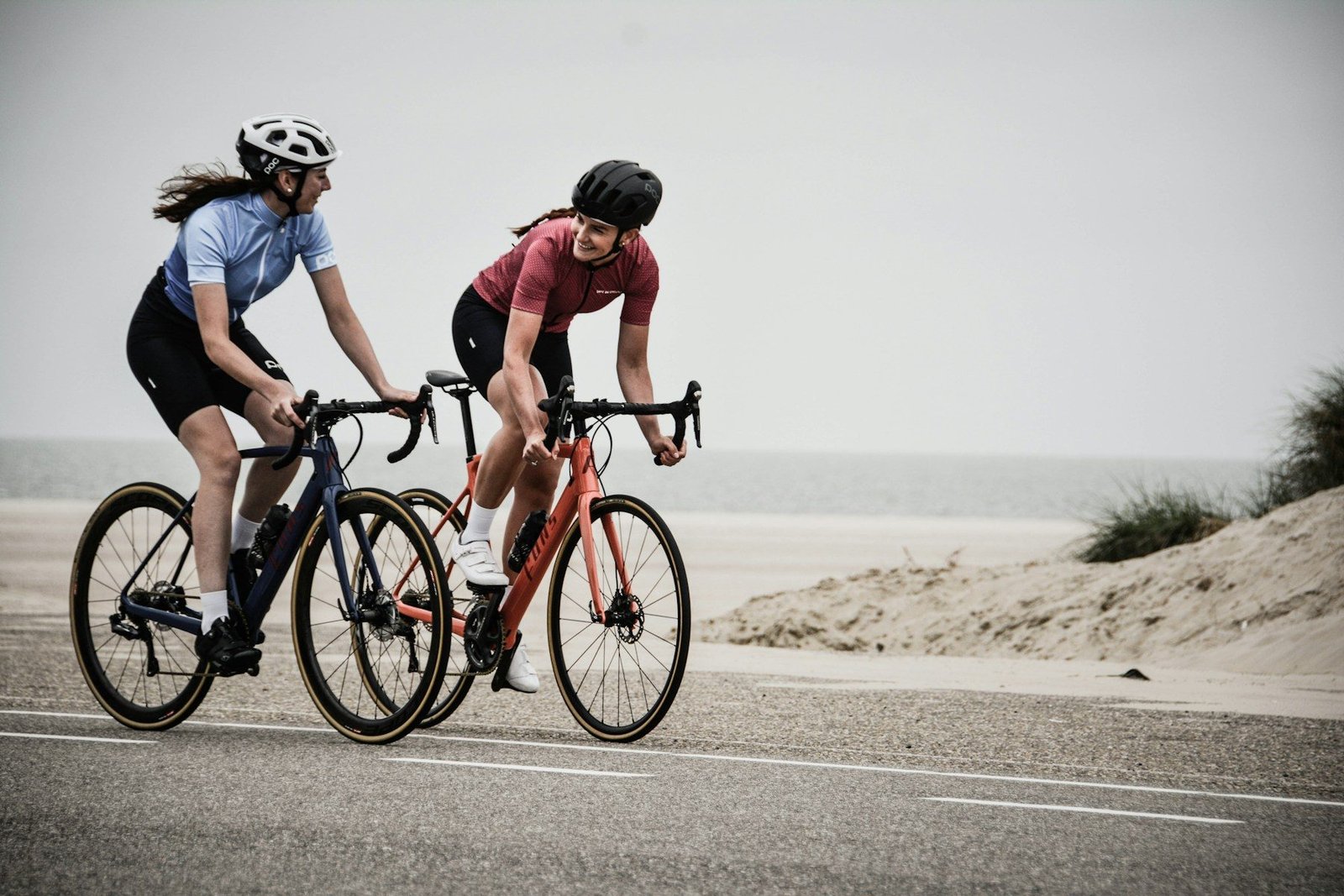
Two cyclists riding side by side along an open coastal road
Last reviewed: January 2026

Most people who say they’re “not confident on a bike” can ride perfectly well. What they lack isn’t balance or fitness — it’s a clear model of how cycling and traffic fit together, so every junction feels like an improvisation.

A note on local law. The technique here applies broadly, but road rules differ by country — which side you ride on, helmet requirements, lighting law, and whether cyclists may use bus lanes. Always check the regulations where you ride. Examples below assume riding on the left; mirror them if you ride on the right.

Find your level

Where are you starting from?

Beginner

You're learning to balance, start and stop, or you haven't ridden in years. Stay off roads for now — a park or traffic-free path is where this stage belongs.

Intermediate

You ride comfortably but avoid busy roads, and junctions make you tense. Road positioning will change the most for you.

Confident

You ride in traffic without thinking. What's left is the conditions most riders avoid: wet roads, winter darkness, long distances.

Beginner

Learning to ride, in stages

The biggest change in teaching cycling over the last twenty years is this: balance first, pedalling second. Stabilisers teach a child to steer a bike that can’t lean, which is the opposite of what riding requires.

1

Take the pedals off

Lower the saddle until both feet sit flat on the ground. Remove the pedals entirely, or use a balance bike. This one change does more than everything that follows.

2

Scoot and glide

Walk the bike along while seated, then push off and glide with both feet up. Practise on a gentle slope until gliding for several seconds feels unremarkable.

3

Steer while gliding

Glide and make gentle turns. Notice that you steer by leaning, and that looking where you want to go does most of the work by itself.

4

Put the pedals back on

Raise the saddle so there’s a slight bend in the knee at the bottom of the stroke. Start with one pedal at two o’clock and push down hard — the bike is far more stable once moving.

5

Practise stopping deliberately

Brake with both levers, more front than rear, shifting your weight back as you slow. Practise this as much as starting.

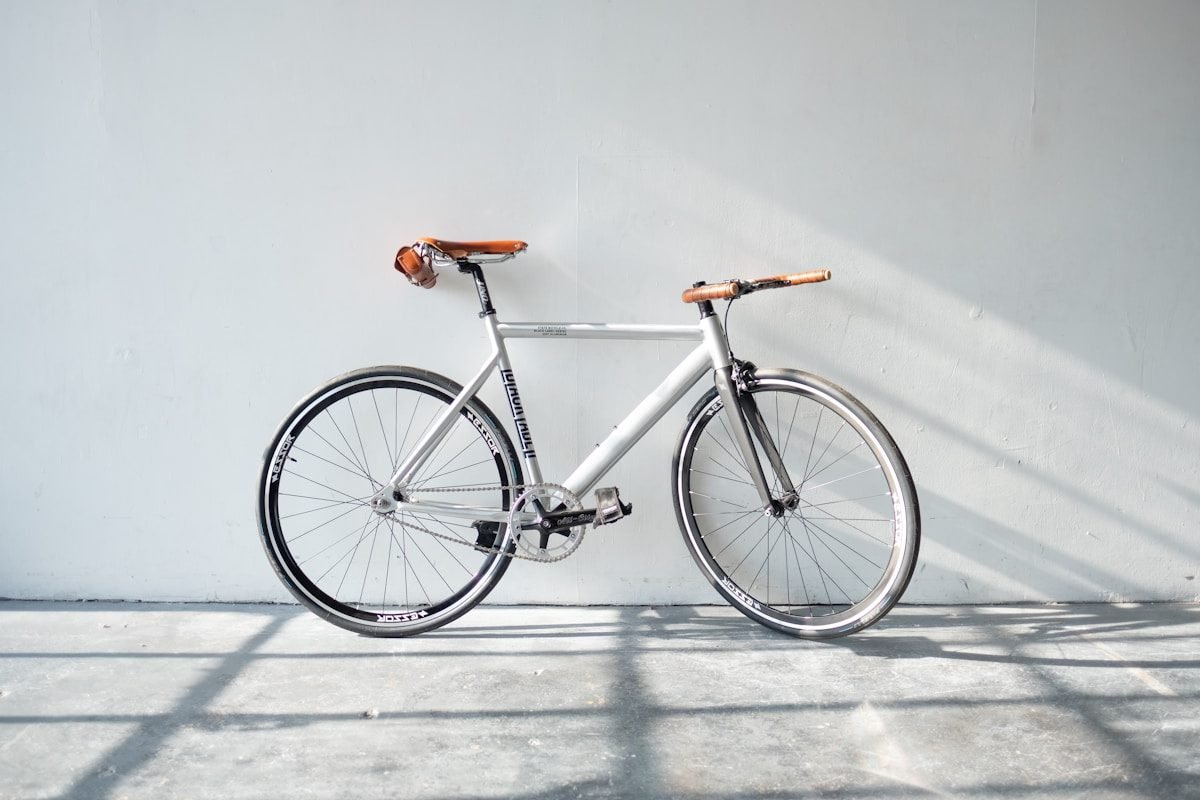
A silver single-speed city bike photographed side-on against a pale wall
The core skill

Road positioning and traffic

Where you ride on the road changes how drivers behave towards you more than anything else you can control.

The two positions to know

The secondary position sits roughly a metre out from the kerb. It’s the default when traffic is flowing and there’s room to be overtaken safely.

The primary position is the centre of the lane. It feels assertive, and new riders resist it — but it is the correct and safest choice whenever you need to be seen and not overtaken.

Move into primary when approaching or passing a junction, going through a pinch point, riding past parked cars, approaching a roundabout, or travelling at roughly the speed of surrounding traffic.

Why hugging the kerb is worse

Riding tight to the kerb feels safer because it maximises distance from passing cars. In practice it does the opposite:

Parked cars

Ride at least a full door’s width out — about 1.2 metres — and hold that line rather than weaving into the gaps. Weaving makes you unpredictable and repeatedly hides you from following traffic.

Junctions and turning

Most collisions involving cyclists happen at junctions. Look and signal early, make eye contact where you can, and never pass a large vehicle on the inside when it might turn across you.

Roundabouts

Take the primary position on approach and hold it through. Sitting near the kerb invites drivers to cut across your path as they exit. Signal your exit clearly.

Conditions

Rain, wind and cold

Bad weather doesn’t make cycling dangerous. Riding in bad weather the same way you ride in good weather does.

Riding in the wet

Brake earlier and more gently. Take corners slower and more upright. Treat painted markings, drain covers and wet leaves as ice, because they behave like it.

Wind

Crosswinds are the ones to respect, especially past gaps in hedges or when a lorry passes. Keep a firm but relaxed grip and leave more space from the kerb.

Cold

Extremities go first, so cover hands, feet and ears before adding torso layers. Dress to feel slightly cold for the first five minutes.

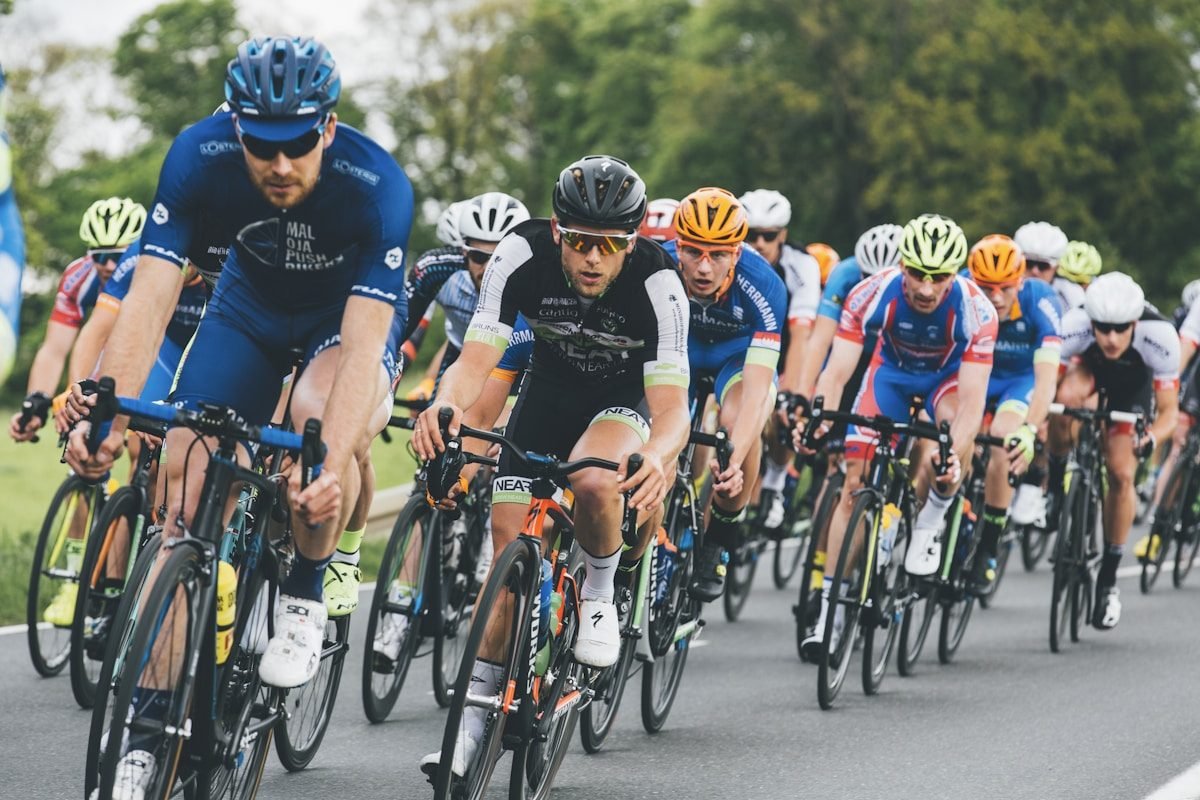
A tightly packed group of road cyclists in coloured jerseys riding together
Visibility

Riding after dark

Being seen at night is a solved problem, and cheap to solve. The mistake most riders make is treating lights as something that makes them visible, rather than something that makes them identifiable — a driver needs to recognise you as a bicycle and judge your speed.

Fluorescent yellow works brilliantly in daylight but does almost nothing at night; it needs ultraviolet light to fluoresce. After dark, reflective material is what matters, because it returns headlights straight back to the driver. Put it on the parts that move — ankles, heels, pedals — because that up-and-down motion is unmistakably human.

Reader feedback

What changed for people

Rated 5 out of 5
I'd been riding in the gutter for years because it felt safer. Moving out a metre completely changed how drivers treat me. I get overtaken properly now instead of squeezed.

Marcus T.
Commuter
Rated 5 out of 5
Taught my daughter with the pedals off, exactly as described. Four days and she was riding. My son took a whole summer with stabilisers years ago.
Elena V.
Parent
Rated 5 out of 5
The point about reflectives on your ankles rather than your back was new to me, and it's obvious once you've read why. Small change, big difference.
Dan W.
Winter commuter
Safety questions

Questions riders ask

Helmet law varies — compulsory in Australia and New Zealand, not in the UK or most of Europe. The evidence is clear that a correctly fitted helmet reduces head injury in a fall, and equally clear that helmets aren’t a substitute for road position and awareness. Wear one, fit it properly, and don’t let it become the whole of your safety thinking.

Generally no, and in many countries it’s illegal for adults. You appear unexpectedly at every driveway and side road at a speed pedestrians don’t move at. Junction collision rates are notably higher for pavement riders.

Don’t engage. Escalation has never improved anyone’s safety and you’re the vulnerable party. Hold your line, don’t retaliate, let them go. If a driver genuinely endangers you, note the registration when safe and report it.

Enter from the marked feeder lane and position yourself where the driver at the front can clearly see you. If the lights are already green as you arrive, don’t filter up the inside of waiting vehicles.

Incrementally. Quiet roads at quiet times, then the same roads busier, then busier roads. Many countries offer subsidised adult cycle training, which is genuinely worthwhile.

Signal whenever it tells someone something useful. Do it early enough to be seen, then return both hands to the bars before you manoeuvre — you need them for braking and control.

Confidence starts with a bike you trust

Run through the M-check before your next ride — ninety seconds that catches nearly everything.

Scroll to Top